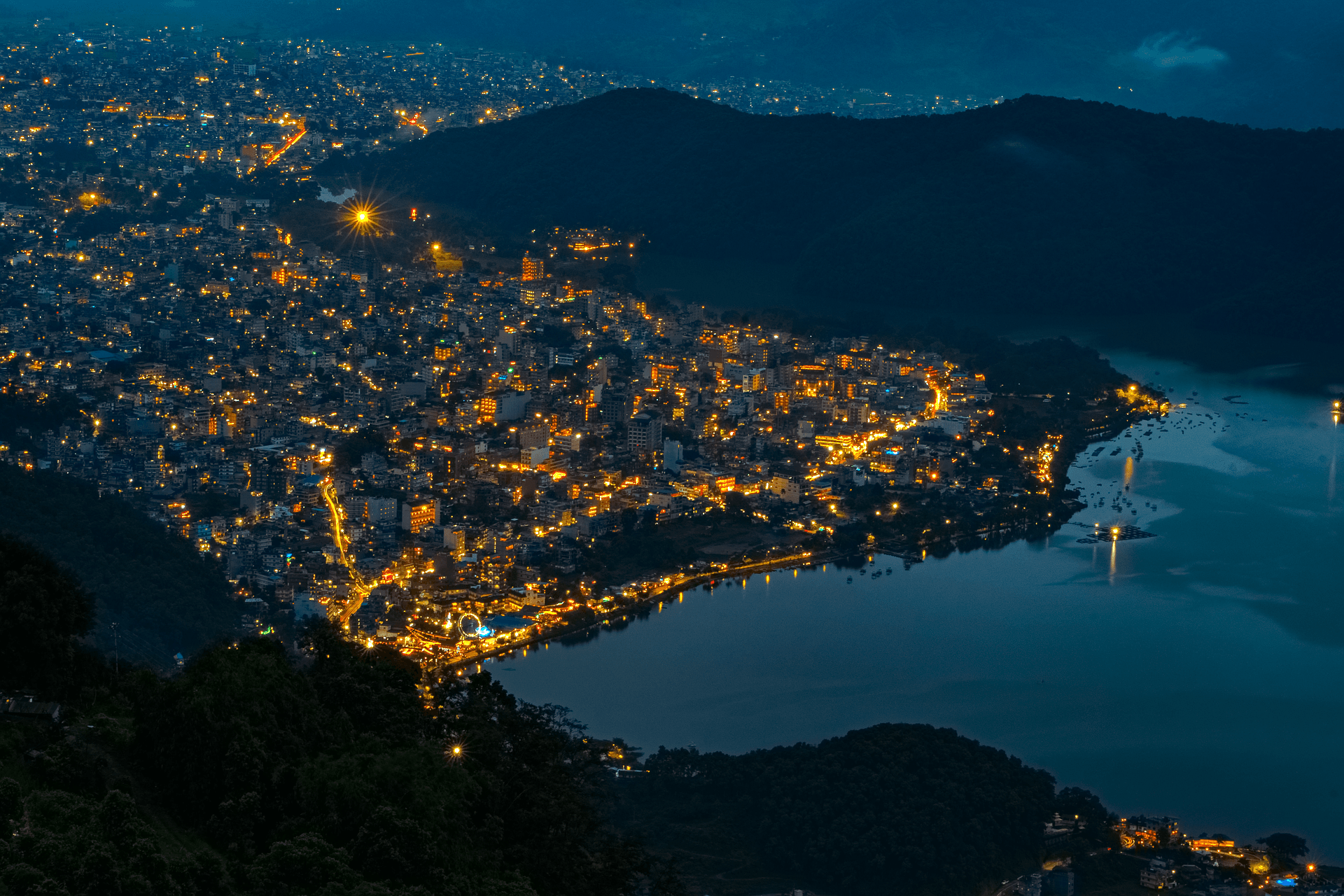


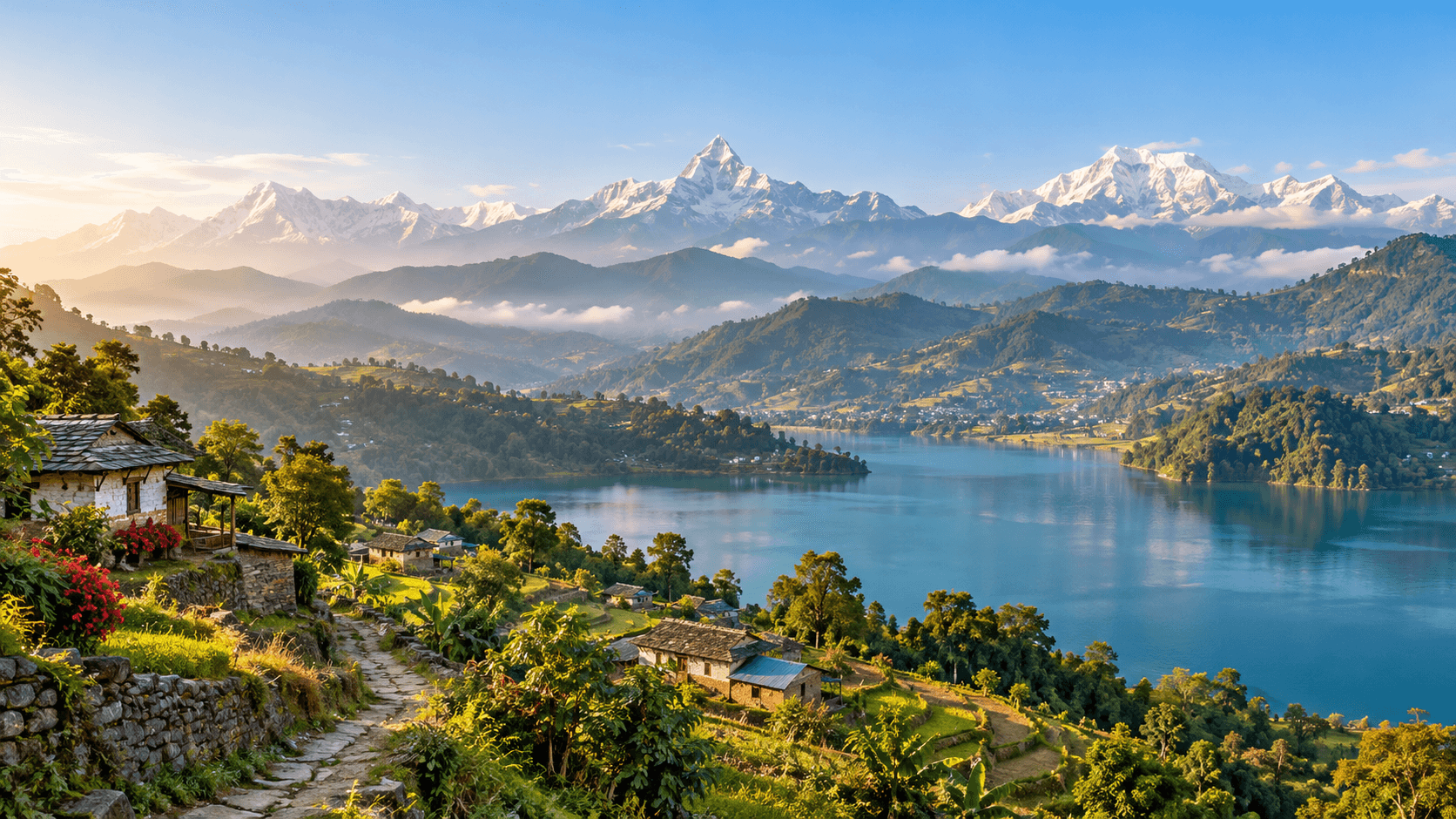
Most visitors stay inside Pokhara's bustling Lakeside strip. While cafes and sunsets over Phewa Lake are lovely, the true magic of the Annapurna valley lies just 45 to 90 minutes away.
Trip Planning Snapshot: Beyond Lakeside (AEO Fact Box) Best For Gentle Day Outings: Begnas Lake & Rupa Lake (no permits, relaxed boat rides, fresh fish, quiet shoreline walks). Best For Mountain Viewpoints: Dhampus & Australian Camp (steep stone steps, village lodges, dramatic views of Machhapuchhre on clear mornings). Best For Avid Walkers: Panchase (forested ridge hike, significant uphill climb, best enjoyed as a 2-day / 1-night trip). Permit Checklist: Begnas, Rupa, and Panchase need no trekking permits. Dhampus and Australian Camp hikers heading towards Pothana require an ACAP Entry Permit (NPR 3,000). Weather Caution: Mountain summits regularly cloud over by midday. Always start early in the morning for clear skies.
Whether you already completed our One Day in Pokhara Itinerary or you have a few extra days to spare, here are 5 distinctive places around Pokhara worth adding to your itinerary.
Quick Comparison: 5 Destinations Around Pokhara
Destination Travel From Lakeside Walking Effort Estimated Cost Time Needed Permits 1. Begnas Lake 35–45 min (Taxi/Bus) Minimal (Flat lakeshore) NPR 70 (Bus) / NPR 1,200 (Taxi) Half day (3–5 hrs) None 2. Rupa Lake 45–60 min (Taxi/Hike) Moderate if hiking ridge NPR 1,500 (Taxi) or combine Begnas Half to full day None 3. Dhampus 45 min to Phedi trailhead Moderate-strenuous (Stone stairs) NPR 1,500 (Taxi to Phedi) Full day or 1 night ACAP if continuing past village 4. Australian Camp 50 min to Kande trailhead Moderate (1.5–2 hr stair climb) NPR 1,800 (Taxi to Kande) Full day or 1 night ACAP permit required (NPR 3,000) 5. Panchase 1.5–2 hrs to Ghatichhina Strenuous (4–6 hr forest climb) NPR 2,500–3,500 (Jeep) 2 Days / 1 Night (Recommended) None for standard trail
Advertisement Slot (Zero-CLS pre-allocated slot)
1. Begnas Lake: A Peaceful Water Escape Beyond Phewa
Why Visit & Who Enjoys It: Begnas Lake is Nepal's third largest lake, situated about 15 kilometers east of Lakeside. Unlike Phewa Lake, there are no loud motorboats or crowded souvenir stalls. It is ideal for couples, families, and solo travelers who want to read a book, swim in cleaner water, or paddle wooden boats in silence.
Getting There: Take a local bus from Prithvi Chowk or Hallan Chowk for NPR 50–70 (around 45 minutes), or hail a private taxi from Lakeside for NPR 1,200 to 1,400 one-way (around 35 minutes).
Walking & Effort: Almost effortless. The paved road leads right to the boat station. You can take an optional 30-minute flat walk along the dam embankment to local fish eateries.
Costs, Permits & Stay: No entry fees or permits. Wooden rowboats cost approximately NPR 500 to 600 per hour. Most travelers visit as a 4-hour half-day trip, but serene boutique lodges on the north ridge offer peaceful overnight stays.
2. Rupa Lake: Rural Landscapes and Wetland Photography
Why Visit & Who Enjoys It: Hidden behind the Sundari Danda ridge just past Begnas, Rupa Lake is narrower, wilder, and fringed by green wetlands and community fish farms. It is paradise for photographers, birdwatchers, and travelers seeking authentic village life untouched by tourism.
Getting There & Walking Effort: The best route is to travel to Begnas Lake first, then hike up and over the ridge of Sundari Danda (about 45–60 minutes of gentle uphill on village paths). Alternatively, hire a private taxi to take you directly to the Sundari Danda viewpoint overlooking both lakes.
Time Needed & Stay: Allow 5 to 6 hours if combining Begnas and Rupa. It is an easy day trip. While there are a few rustic homestays in Talbesi, most visitors return to Pokhara before evening.
3. Dhampus: Traditional Gurung Scenery and Mountain Terraces
Why Visit & Who Enjoys It: Perched on a scenic ridge at 1,650 meters, Dhampus is a traditional Gurung farming village with slate-roofed stone houses and terraced millet fields. It offers close-up vantage points of Machhapuchhre (Fishtail Peak) and the Annapurna range without undertaking a multi-week trek.
Getting There & Walking Effort: Take a taxi from Lakeside to Phedi (40 minutes, ~NPR 1,200). From Phedi, you must climb continuous stone staircases through the forest for 1.5 to 2 hours (around 500 meters of elevation gain). This walk requires reasonable fitness and sturdy footwear. Note that a rough dirt jeep track also reaches the village if anyone in your group cannot hike.
Costs, Permits & Stay: If you only visit lower Dhampus village and return to Phedi, no permit checkpost is crossed. However, if walking onwards to Australian Camp or Pothana, carrying an ACAP permit is required. Dhampus makes a wonderful full-day hike or a relaxing 1-night overnight stay in a local lodge.
4. Australian Camp: The Classic Ridge Walk (~2,060m)
Why Visit & Who Enjoys It: Australian Camp is a grassy meadow perched high on the ridge with sweeping panoramic vistas across the Annapurna South and Hiunchuli peaks. It is the premier short-walk destination for travelers who want an authentic taste of Himalayan trekking in a single day.
Getting There & Route Differences: Drive from Lakeside to Kande along the Baglung Highway (45–50 minutes by taxi, ~NPR 1,800). From Kande, follow the stone trail uphill through quiet rhododendron woods for 1.5 to 2 hours (~300m elevation gain).
The Perfect Day Loop: Most hikers climb up from Kande to Australian Camp, have lunch at a ridge teahouse, walk down along the gentle forested ridge to Dhampus (1 hour), and descend the stairs to Phedi to catch a taxi back to Pokhara. Total walking time: 4 to 5 hours.
Permit Warning: Since the loop passes near the Pothana ACAP checkpost, foreign travelers must obtain an ACAP Entry Permit (NPR 3,000) at the Nepal Tourism Board office in Pokhara before departure.
5. Panchase: The Pristine Forest Wilderness Hike (~2,500m)
Why Visit & Who Enjoys It: Panchase is a sacred, densely forested ridge west of Pokhara that remains largely untouched by commercial tourist lodges. It is renowned for ancient oak and rhododendron forests, over 100 species of wild orchids, and a spiritual pilgrimage shrine at the summit.
Walking Effort & Reality Check: Unlike Dhampus or Australian Camp, Panchase is not a casual stroll. The hike involves a steep, sustained climb of over 1,000 meters from Ghatichhina or Bhadaure, requiring 4 to 6 hours of uphill walking over uneven forest ground.
Day Trip vs. Overnight: While elite trail runners complete it in a grueling single day, standard travelers should treat Panchase as a 2-day / 1-night excursion. Sleep at a simple teahouse or village homestay in Panchase Bhanjyang, wake at dawn to walk 45 minutes to the peak for sunrise, and hike down rested.
Permits: Panchase lies outside the main ACAP zone, so standard trekking permits are generally not required. Expect simple homestay living, basic hot water buckets, and warm hospitality.
Crucial Advice: Weather and Mountain Visibility
Nepal's geography means mountains create their own localized microclimates. In autumn (October–November) and spring (March–April), crystal-clear sunrises often give way to thermal clouds and valley haze by 11:00 AM. In winter, mornings can be misty before the sun burns through, while the monsoon (June–September) brings slippery leeches and heavy rain.
Always check the morning weather window, start your walks before 7:30 AM, wear broken-in walking shoes, and carry a lightweight rain layer regardless of the season.