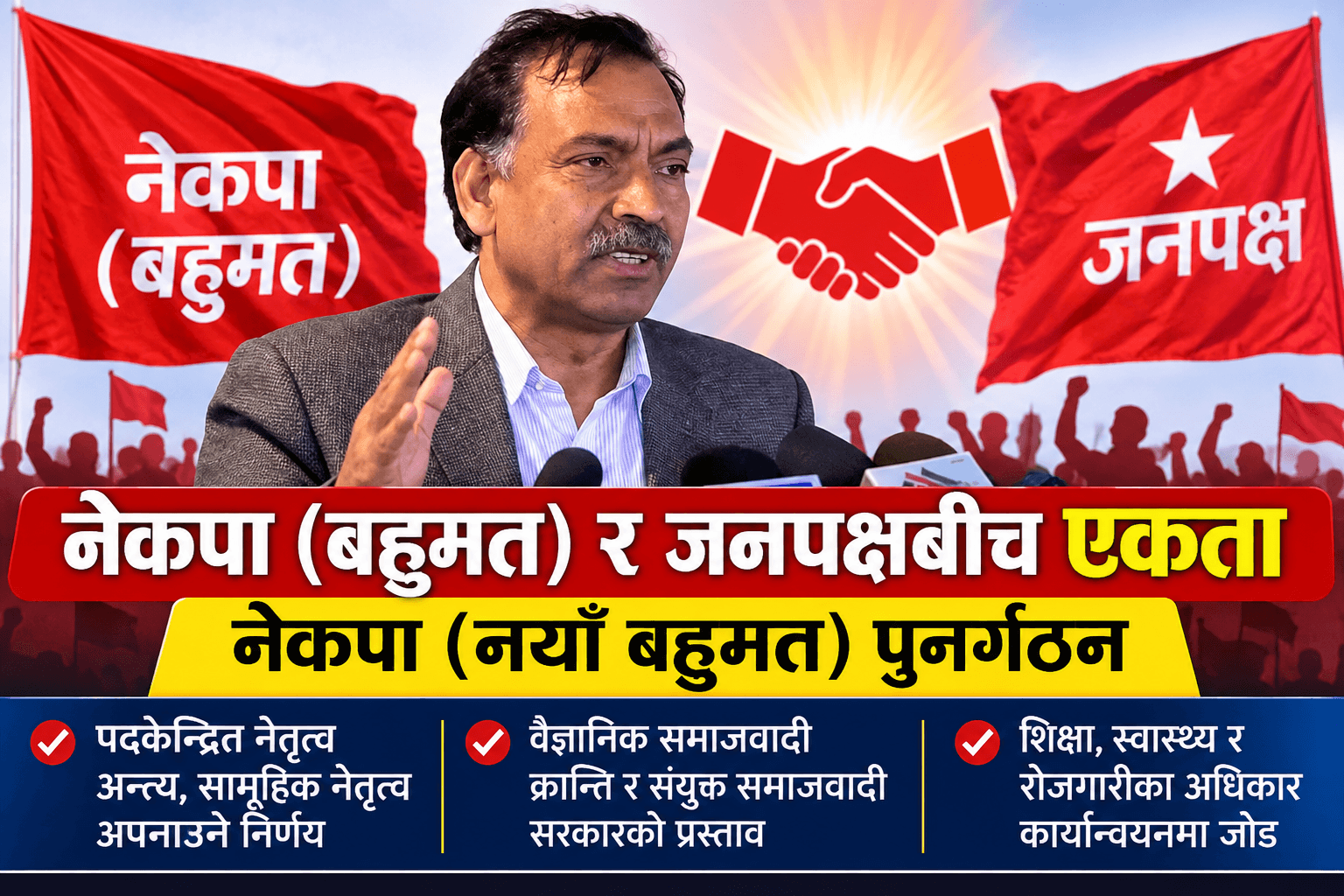
Kathmandu, Nepal. The Communist Party of Nepal (Majority) and the Communist Party of Nepal (Janapaksha) have united to reorganise the Communist Party of Nepal (New Majority). The newly reorganised party has decided to adopt a collective leadership system, ending the position-centred leadership structure.
The party’s unity meeting, held from Mangsir 6 to 9, decided on the name “Communist Party of Nepal (New Majority),” according to party office member Baburam Gajmer.
At a press conference in Kathmandu on Thursday, party coordinator Dharmendra Bastola, also known as Kanchan, announced the decisions of the meeting held after the merger and outlined the party’s organisational and political direction.
Collective Leadership System
The newly formed CPN (New Majority) has decided to replace individual and position-centred leadership with a collective system based on ideology and political principles.
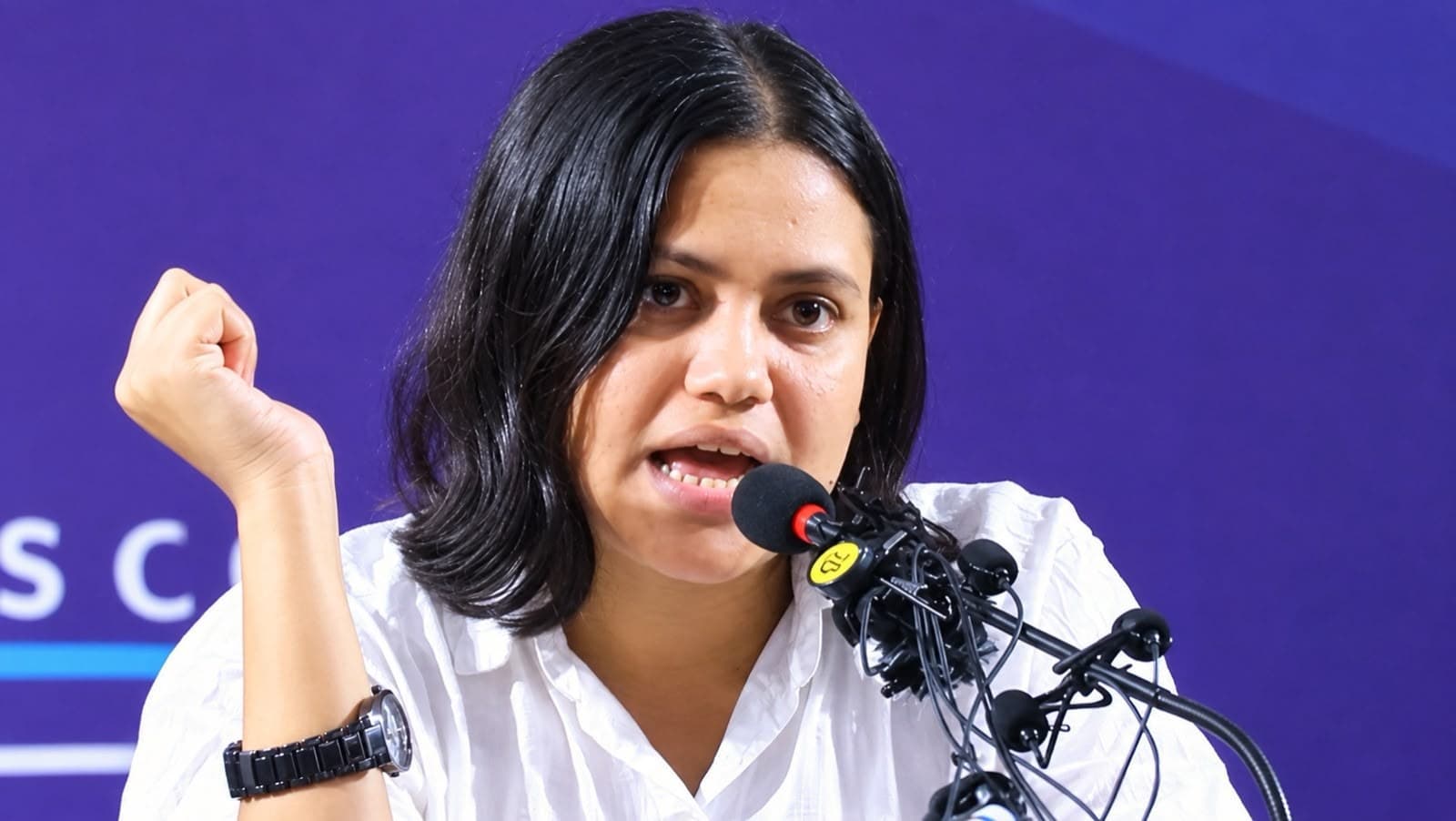
According to party office member Indira Adhikari, the party will not have a single top position such as chairperson, general secretary or president. The party convention will remain its highest authority.
In the absence of a convention, the party will operate through the Central Committee, Politburo, Organisation Bureau and Central Office, with decisions made collectively.
Coordinator Dharmendra Bastola said the party had adopted an idea-centred collective leadership system to end the practice of leadership focused on individual positions. He described the merger as an effort to address divisions and weaknesses within Nepal’s communist movement and advance it in a new direction.
Proposal for a Joint Socialist Government
The party has decided to take a proposal for the formation of a “Joint Socialist Government” to the public as part of its political direction toward a scientific socialist revolution.
Party office member Baburam Gajmer described comprador capitalism as a major problem facing Nepal. He cited the influence of foreign capital, exploitation of national resources, lack of industrialisation, and the increasing migration of young people abroad as consequences of the existing system.
The party also stated that a new people’s rebellion would be necessary to secure the interests and rights of working people. Coordinator Bastola argued that the current ruling system has a comprador capitalist character and called for a scientific socialist revolution to bring change in favour of the working class.
Calls for Free Education, Healthcare and Employment Rights
The newly reorganised party has urged the government to immediately implement fundamental rights guaranteed by Nepal’s Constitution.
Its demands include free education up to the secondary level, free basic healthcare for citizens and the effective implementation of the right to employment for every citizen.
Coordinator Bastola said the government should take immediate and concrete steps to create extensive employment opportunities across the country. He also criticised the government, alleging that constitutional rights and freedoms are increasingly being privatised and commercialised.
Following the merger, the CPN (New Majority) has identified collective leadership, scientific socialist revolution and the protection of working people’s rights as key elements of its political direction.