
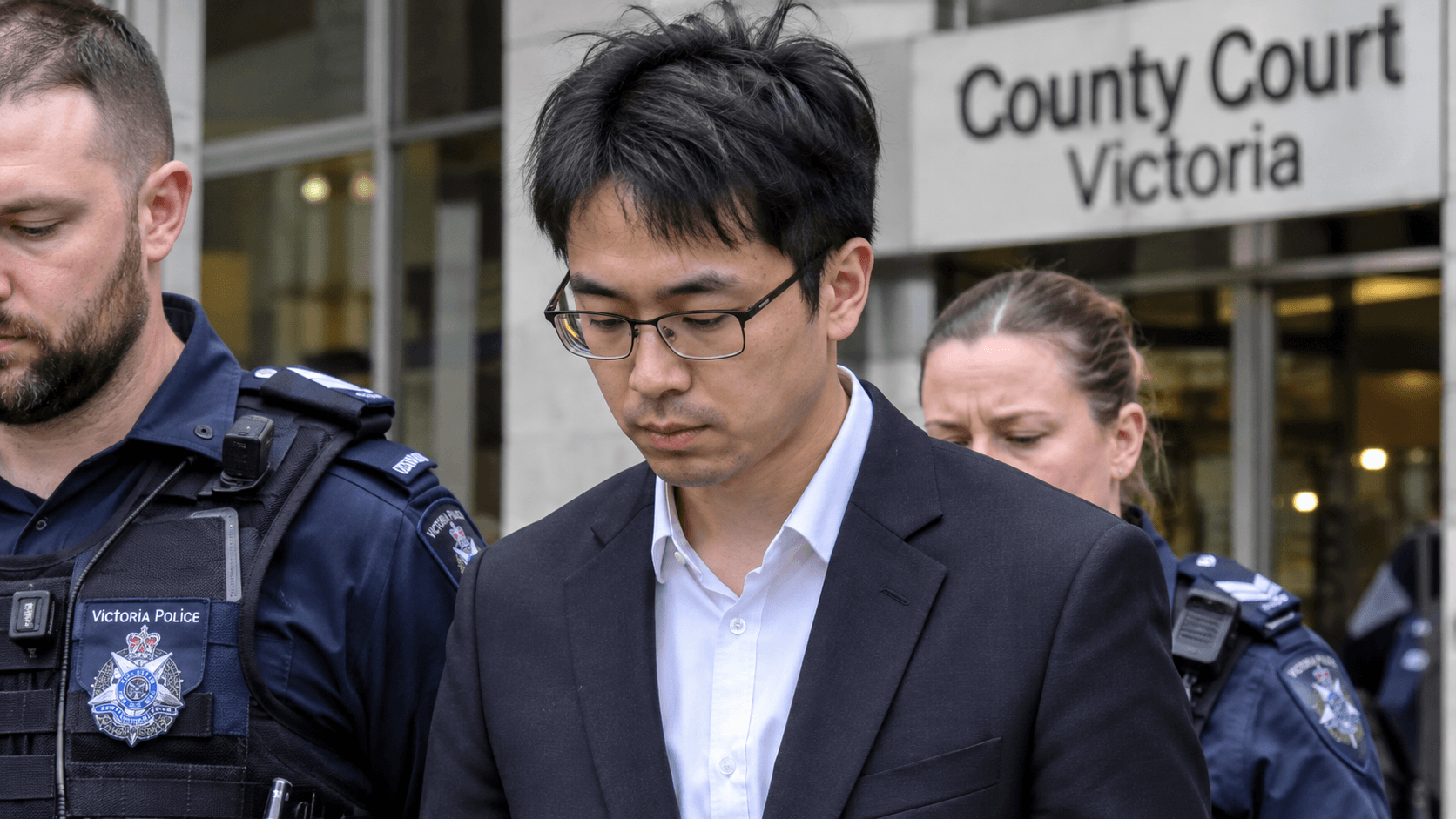
A former trainee surgeon in Melbourne, Australia, has pleaded guilty to secretly filming female colleagues and other individuals in hospital toilets and shower areas.
Ryan Cho, 29, is a Singaporean citizen who was involved in medical training and work at hospitals in Melbourne. According to the Australian Broadcasting Corporation (ABC), he secretly recorded people at three major hospitals—Austin Hospital, Royal Melbourne Hospital and Peter MacCallum Cancer Centre—during 2024 and 2025.
Court proceedings detailed 541 victims at Austin Hospital, 277 at Royal Melbourne Hospital and 50 at Peter MacCallum Cancer Centre. A total of 874 victims were cited in relation to the hospital offences.
How the Secret Recording Was Carried Out
Prosecutors told the court that Cho concealed mobile phones inside white mesh bags, cutting holes in the bags so the camera lenses could record. The bags were reportedly hung from hooks attached to toilet doors.
The court also heard that Cho tampered with locks and obstructed other toilets to direct colleagues towards the locations where he had placed recording devices.
He allegedly entered hospital toilets outside his rostered shifts and visited areas where he was not assigned to work. The recordings were later organised on his laptop into folders labelled by hospital and victim.
Secret Recordings in Shared Accommodation
The investigation also uncovered secret recordings made in shared accommodation where Cho lived.
Court proceedings included allegations involving a former housemate. Details presented included 104 videos and 3,424 images relating to the woman, along with private activities and sensitive personal material.
Cho also recorded and retained footage involving two girls, aged 10 and 8, who were the children of a hospital staff member. These matters were included in charges relating to producing and possessing child abuse material.
Concerns Raised at Hospitals
According to evidence presented in court, hospital staff raised concerns about a suspicious bag in a bathroom as early as 2024.
An internal hospital inquiry was conducted in June 2025, and Cho was reportedly warned to stay away from the Austin Hospital emergency department. Prosecutors said he continued to interfere with toilet doors and facilities.
On July 3, 2025, staff discovered a recording phone hidden inside a mesh bag and contacted police. Investigators later found thousands of video and image files on his electronic devices.
Impact on Victims
During the pre-sentence hearing in November 2026, dozens of victims described the emotional and professional consequences of the secret recordings.
They told the court that the offences had severely affected their privacy, dignity and sense of safety at work. Several reported anxiety, depression and ongoing fear when using public or workplace bathrooms.
Nurse Courtney Whelan waived her right to anonymity and spoke publicly about the impact. She said she had been diagnosed with post-traumatic stress disorder (PTSD), anxiety and depression, and had stopped using workplace bathrooms after learning she had been filmed.
Victims described how the recordings had changed their lives and made them feel unsafe in places where they had previously trusted their colleagues.
More Than 900 Charges Consolidated Into 13
Cho initially faced more than 900 charges. Following an agreement between prosecutors and the defence, the charges were consolidated into 13 counts.
He pleaded guilty to offences including producing intimate images, stalking, installing optical surveillance devices, producing and possessing child abuse material, and failing to comply with police directions.
The court said his early guilty plea would be considered during sentencing. Prosecutors, however, raised concerns about his risk of reoffending and prospects for rehabilitation.
Current Status and Sentencing
On November 26, 2026, the Melbourne County Court ordered Cho to be remanded in custody. He had previously been on bail.
He is scheduled to be formally sentenced on February 12, 2027.
The court also heard that Cho's medical career had effectively ended and that he could face deportation from Australia after serving his sentence.
The case has raised serious questions about privacy protections, workplace security and the effectiveness of internal reporting systems in hospitals and other sensitive workplaces.