GLOBAL ECONOMIC OUTLOOK (Cutoff: 20:45 NPT, Oct 13, 2026) Published at the IMF Annual Meetings in Bangkok, the October 2026 World Economic Outlook reports a resilient but strained global economy, lifted by unprecedented artificial intelligence capital expenditure amid geopolitical headwinds. Surging capital spending on artificial intelligence infrastructure has provided an unexpected stabilizer for the global economy, offsetting the drag of oil prices above $100 per barrel and heightened regional warfare. However, the International Monetary Fund warns that this technological shield masks deep structural vulnerabilities, including record sovereign debt burdens and a widening digital divide. Illustrative photo: Financial market terminal and macroeconomic indicators (Photo by Chris Liverani on Unsplash / Unsplash License). The IMF projects global growth of 3.1% in 2026 and 3.4% in 2027. 1. What Changed in the Latest IMF Outlook? In its flagship October 2026 World Economic Outlook (titled Resilience Under Strain, Urgent Choices), the IMF upgraded its 2026 global real GDP growth projection to 3.1 percent. This represents a 0.1 percentage point upward revision compared to the July 2026 WEO Update, though it marks a moderation from the observed 3.5 percent expansion in 2025. Growth for 2027 is projected at 3.4 percent. The revision reflects divergent trends across major economies, as detailed in the official projection framework: Economic Group / Country Forecast Horizon Latest Estimate (Oct 2026) Earlier Estimate (July 2026) Revision (Percentage Points) World Real GDP 2026 (Projection) 3.1% 3.0% +0.1 pp World Real GDP 2027 (Projection) 3.4% 3.3% +0.1 pp India 2026 (Projection) 7.0% 7.0% 0.0 pp United States 2026 (Projection) 2.3% 2.2% +0.1 pp China 2026 (Projection) 4.5% 4.7% -0.2 pp Data Notes: Figures for India are calculated on a fiscal-year basis. China's markdown reflects ongoing property sector deleveraging and high energy input costs. Historical 2025 growth of 3.5% represents observed outcome data rather than forward-looking projections. 2. How Does the Report Describe AI-Related Investment? The IMF characterizes the ongoing technology wave as a positive demand and productivity shock with distinct transmission channels: Buffer Against Energy Shocks: Crude oil sustained above $100 per barrel due to Middle East hostilities would ordinarily trigger stagflationary pressures. However, aggressive capital expenditures on AI data centres, microchips, and cloud infrastructure have supported aggregate demand. Supply Chain Beneficiaries: The gains are highly concentrated among advanced economies creating foundational software models and Asian manufacturing hubs producing advanced hardware (including South Korea, Taiwan, Malaysia, and Thailand). Widening Technological Divergence: The Fund warns of an emerging digital fault line between high-investment tech-enabled economies and lower-income nations burdened by external debt and unable to finance digital transformation. 3. Risks and Assumptions Underpinning the Forecasts The baseline outlook assumes that current energy market stresses remain manageable. However, the IMF identifies critical downside risks: Historic Sovereign Debt Loads: Global public debt is approaching 100 percent of global GDP, severely constraining the fiscal room of governments to deploy counter-cyclical spending during future shocks. Depletion of Energy Buffers: While strategic petroleum releases and maritime rerouting have prevented acute shortages, emergency reserves are running low as Middle East conflicts persist. AI Valuation Reassessment: If corporate revenue from artificial intelligence fails to meet lofty capital market expectations, a sharp equity sell-off could destabilize global financial conditions. 4. Official Sources, Regulatory References & Credits Verified Primary Documents, Multilateral Portals & News Wire Credits: International Monetary Fund (IMF): October 2026 World Economic Outlook Report—‘Resilience Under Strain, Urgent Choices’ (imf.org/en/publications/weo). IMF Annual Meetings (Bangkok): Official press briefing and plenary releases on global macroeconomic surveillance. Reuters News Service: Dispatch from Bangkok, Oct 13, 2026—‘IMF says AI investment propping up global growth; war, debt threaten outlook’ (Reuters Source Link). Photo Credit: Chris Liverani on Unsplash (Unsplash License). 5. Developments That Matter to Nepal (Editorial Analysis) Editorial Note: The IMF's global overview evaluates macro aggregates and regional blocs rather than a dedicated chapter on Nepal. The following linkages represent editorial macroeconomic analysis by HamroBuzz: Import Price Pressures & Petroleum Bills: With crude oil elevated above $100/barrel, Nepal's petroleum import bill—historically the nation's largest foreign exchange outlay—faces upward pressure, which could feed into domestic transport and consumer inflation. Remittance Corridors: Elevated oil revenues support public works and fiscal budgets in the Gulf Cooperation Council (GCC), helping sustain demand for Nepali migrant labor. However, transit disruptions (such as Riyadh airport closures) introduce operational bottlenecks. Tailwind from India's 7.0% Growth: As Nepal's primary trading partner and currency peg, India's steady 7.0 percent expansion provides strong support for Nepali cross-border commerce, agricultural exports, and regional tourism arrivals. IT Services Opportunities: While Nepal is not an AI semiconductor manufacturing hub, its growing software exports and tech workforce could capture sub-contracting and data services demand if local digital infrastructure is strengthened. 6. Frequently Asked Questions Question 1: What is the IMF forecasting for global growth? The IMF projects global real GDP growth of 3.1 percent in 2026 (a 0.1 percentage point increase from July) and 3.4 percent in 2027, following 3.5 percent growth in 2025. Question 2: How does AI investment affect the IMF's assessment? Record capital spending on artificial intelligence data centers, chips, and enterprise software has acted as an unexpected demand engine, helping insulate the world economy from high oil prices and geopolitical headwinds. Question 3: What could change the outlook? Key negative risks include high government debt restricting fiscal responses, persistent energy spikes from widening war, or a sharp market correction if AI monetization lags expectations. Question 4: Does the report provide a Nepal-specific forecast? The main flagship World Economic Outlook policy report groups Nepal within Emerging and Developing Asia without a dedicated analytical chapter. Specific country-level projections for Nepal are maintained in the statistical database and bilateral IMF Article IV consultation reports. 7. Related HamroBuzz Coverage & Resources Explore related reporting on Nepal's macroeconomic resilience, remittances, and international markets: Remittance Inflows & Liquidity: Nepal Rastra Bank Reports Record Rs 136 Billion Monthly Remittance Inflow as Banking System Liquidity Hits Historic Highs Middle East Energy & Flight Shocks: Aviation Regulators Extend Middle East Airspace Reroutes; Global Flight Times and Fuel Costs Surge Precious Metals & Global Inflation: Nepal Gold and Silver Prices: October 12, 2026 Update
Economy
15 min read
IMF October Outlook: AI Investment Supports Growth Amid Rising Risks
World Economic Outlook upgrades 2026 global real GDP forecast slightly to 3.1 percent; massive high-tech capital expenditures buffer oil shocks, but sovereign debt and market valuation risks loom.
यो समाचार नेपाली भाषामा पनि उपलब्ध छ:
नेपालीमा पढ्नुहोस् →
Roshan AdhikariSenior Economic & Policy Correspondent
Tuesday, 27 Ashwin 2083 BS | AD: October 13, 2026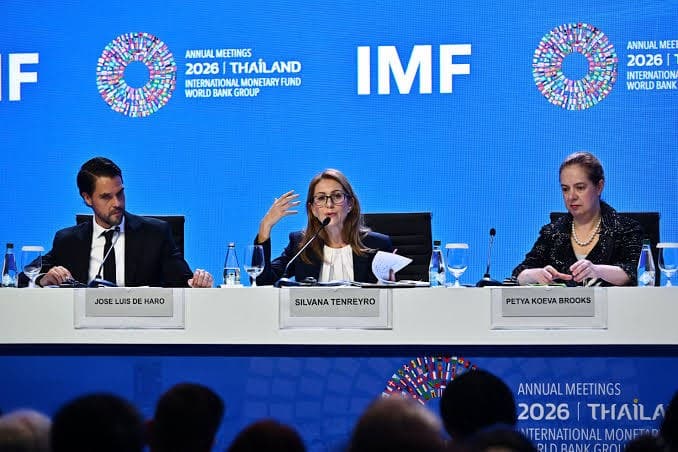
- The International Monetary Fund (IMF) released its October 2026 World Economic Outlook (WEO), projecting global economic growth at 3.1 percent for 2026, upgraded by 0.1 percentage point from its July update.
- Heavy capital investment in artificial intelligence (AI) infrastructure, data centres, and semiconductors has cushioned global activity against crude oil prices staying above $100 per barrel driven by Middle East conflict.
- Among major economies, India is projected to remain the fastest-growing major economy at 7.0 percent, the United States is projected at 2.3 percent, and China slows to 4.5 percent.
- Key downside risks highlighted include historic public debt levels, depleting energy supply buffers, and the vulnerability of financial markets to a sharp reassessment of AI profitability.
- For Nepal, while higher global oil prices risk widening import bills, India's robust 7.0 percent expansion and resilient Gulf remittance flows offer critical economic shock absorbers.
ABOUT THE AUTHOR
Roshan Adhikari
Senior Economic & Policy CorrespondentSenior economic and policy correspondent covering public procurement, government fiscal decisions, and macroeconomic governance at HamroBuzz.
More articles by this authorMore from Economy



Reader Comments
0Leave your perspective
Loading comments...