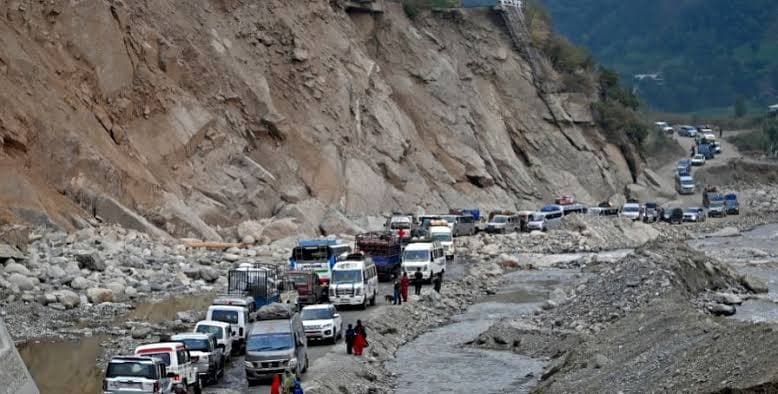

KATHMANDU (HamroBuzz Newsroom): The Department of Roads and Ministry of Physical Infrastructure on Monday opened an emergency single-lane diversion along the Roshi River corridor of BP Highway, allowing stranded light passenger vehicles to resume daylight transit between Kavrepalanchok and Sindhuli after historic flooding washed out eastern Nepal's primary conduit.
BP Highway Operational Fact Box
- Active Sector: Bhakundebesi–Chowkidanda–Nepalthok (Alternating one-way light convoy).
- Vehicle Restrictions: Multi-axle freight carriers and heavy trucks strictly banned.
- Operating Hours: 06:00 to 18:00 daily (Closed overnight due to slope collapse hazard).
- Attribution Authority: Department of Roads (DoR), District Administration Office Kavre, Nepal Police.
What caused the catastrophic collapse along the BP Highway?
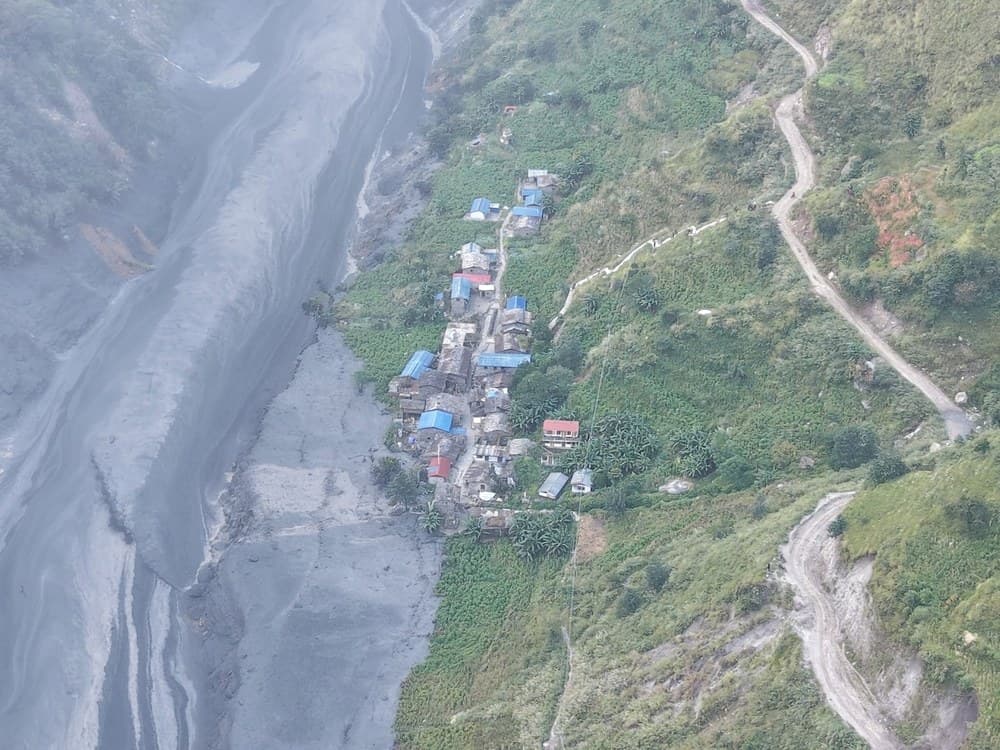
Torrential monsoon rainfall triggered extreme hydrodynamic surges down the Roshi Khola river basin, severely undercutting the basal foundations of the Japanese-built highway across fourteen distinct structural sections. Over 8.5 kilometers of asphalt were swept downstream, cutting off overland connections between Kathmandu and the eastern Tarai. Rapid intervention by military engineering teams deployed wire gabions and earthen fills to re-establish a passable ledge.
"Restoring connectivity ahead of Dashain is an absolute national priority. Crews operated machinery day and night to break the isolation, though travelers must exercise extreme caution on the gravel bypass."
— Director General, Department of Roads
Which types of vehicles are currently permitted through the Roshi corridor?
Traffic controllers are currently screening access to ensure only four-wheel-drive jeeps, passenger utility vans, ambulances, and emergency logistics carriers proceed through the gorge. All commercial bus operators and freight consignments must utilize the Kanti Highway or the Narayangadh-Mugling arterial.
When will full freight and commercial bus traffic be restored?
Permanent two-lane reconstruction will require major slope anchoring and elevated concrete retaining structures along the riverbank. Officials estimate detailed geotechnical surveys and civil contracting will span six months before commercial heavy freight can safely return to the corridor.